
Choose sunglasses for a round face by checking front width, lens height, bridge contact, cheek clearance, glare, and movement. Open the detector
Sunglasses for Round Face: Build the Fit Around the Light
The best sunglasses for a round face start with a frame that clears the cheekbone line, adds a deliberate upper edge, and stays stable when you smile, look down, and walk outside. Test the front width and lens height before judging the color or the word printed on the product page.
Read the Round Pattern in the Same Light
A round pattern usually has a face length close to cheekbone width, full cheeks near the widest line, and a lower outline without a hard corner. Sunglasses add two variables that clear prescription frames can hide: lens tint changes the apparent weight of the rim, and bright outdoor reflections can make a frame look smaller or flatter than it is.
Use one straight-on photo or mirror view, keep the head level, and pull hair away from the cheekbones. The label is a starting description. The useful question is where the sunglasses create a new line and where they land when the face moves.
The phrase best sunglasses for round face still leads to the same practical answer: compare the line, width, lens height, and movement result instead of trusting a shape label alone.
Start With Front Width, Not Lens Color
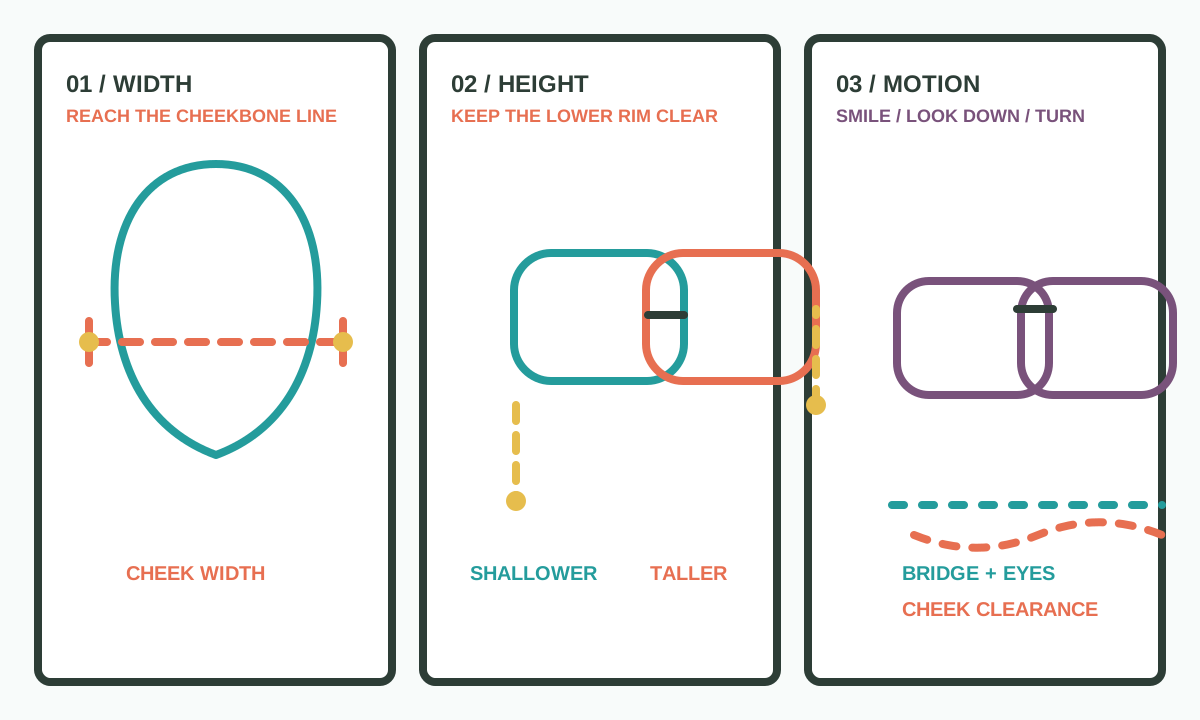
Measure the widest visible cheekbone line, then compare it with the full front of the sunglasses. The outer edge should reach that line and may extend slightly beyond it. An under-width pair can stop inside the cheeks and repeat their curve; an oversized pair can hide the eyes and let the rims dominate.
Use the frame measurements when they are available: lens width, bridge width, and temple length. The printed size is a starting record, not a guarantee. Keep the dimension that works and change one variable at a time.
The same width gate also helps when comparing sunglasses for diamond face: the cheekbone line still matters, but a diamond pattern needs a separate peak-release check rather than a round-face conclusion.
Choose a Line That Leaves the Cheeks Some Air
The frame should add structure without making the cheeks look crowded:
- Square or rectangular: clear corners and a long upper route can interrupt a soft curve.
- Wayfarer: a stronger brow and outward corners can leave the fullest cheek area quieter.
- Lifted cat-eye: the outside edge sends the line toward the temples instead of ending at the cheek.
- Geometric: a hexagonal or softly angular outline can add direction when the front width is controlled.
- Round: possible, but test a larger front or straighter brow so the frame does not simply echo the face.
When someone asks for the best sunglass shape for round face, treat the phrase as a comparison prompt rather than a fixed rule. Try two different lines at the same usable width and keep the one that changes the outline without losing the eyes.
Let Lens Height Control the Lower Landing
Two pairs can have the same front width and create different results because their lens heights are different. A deep lens can drop onto the cheek during a smile; a shallow lens may leave more air below the eye but can look too light if the browline disappears.
Compare a shallower and a taller lens at nearly the same front width. Mark the lower rim in a mirror, smile, and turn three-quarters. If the lower edge touches the cheek, test lens height or bridge position before abandoning the whole frame family.
This is where good sunglasses for round faces become a fit decision: the usable pair is the one whose lower rim clears the cheek while the bridge and temple arms stay calm.
Check the Bridge and the Pupils Before the Finish
Put the sunglasses on without pushing them up. Look down and check whether the bridge remains seated. Then look straight ahead and note whether the eyes stay sensibly placed inside the tinted lenses. A dark lens can hide a small shift, so check from the side as well as from the front.
For a low bridge, adjustable nose pads or a frame with a different bridge shape may matter more than a sharper corner. For a strong prescription or a wrap-style sun lens, ask the optician to confirm optical centering and the usable lens area before ordering.
Do the Outdoor Movement Test
Use a five-minute test instead of approving the pair from one still image:
- Neutral: confirm that the front reaches the cheekbone line and the eyes do not look lost.
- Smile: watch the lower rim and note any cheek contact.
- Look down: check bridge contact and whether the frame slides.
- Turn: check temple pressure, crookedness, and side flare.
- Walk toward a bright window: look for glare that hides the eye position or makes one lens appear much heavier.
Write the first failed variable as width, height, bridge, pupils, glare, or temples. Change only that variable in the next pair. This makes a failed try-on useful instead of turning every miss into a new shape rule.
Keep Gender and Style Labels in Their Place
The same fit checks apply when shopping for sunglasses for round face female styles or sunglasses for round face women. Color, lens tint, brow thickness, and temple decoration can change the mood, but they do not replace front width, bridge contact, cheek clearance, or movement.
If a bold option is called square sunglasses for round face, inspect the actual corner radius, lens height, bridge, and front width. A square name does not guarantee useful contrast, and a softer corner can still work when the line reaches the cheeks and survives the movement test.
FAQ
Which sunglasses are usually a good first comparison for a round face?
Start with a rectangular, softly square, wayfarer, lifted cat-eye, or controlled geometric frame. Compare two lines at a similar width, then let cheek clearance and movement decide.
Should sunglasses for a round face be oversized?
Not automatically. The front should reach the widest facial line without making the eyes look small or destabilizing the bridge. More width after that point can become bulk.
Do polarized lenses change the shape test?
They can change glare and visible eye contrast, but they do not change the fit gate. Check the frame in bright light, confirm the bridge, and make sure the lens design matches your prescription needs.
Can a round frame work on a round face?
Yes, when the width, browline, bridge, and lens landing create enough difference from the facial curve. A small round wire frame that stops inside the cheekbone line is the riskier first test.
Keep the Pair That Makes the Test Repeatable
Choose sunglasses for round face by recording the front width, lens height, bridge behavior, eye position, cheek clearance, glare, and movement in the same order. Keep the pair that adds a visible line, protects the lower cheek from rim contact, and stays readable outdoors. Choose the tint and decoration after the geometry survives.
For clear-frame fit and prescription constraints, compare the round-face glasses guide after the outdoor sunglasses test.