
Choose glasses for a heart shaped face by balancing the upper width with a controlled lower counterline, then checking bridge contact and movement. Open the detector
Glasses for Heart Shaped Face: Balance the Upper Width, Then Test the Fit
The best glasses for heart shaped face are frames that keep the upper line quiet and add controlled visual weight below the eyes. Start with an oval, round, aviator, or softly bottom-emphasized frame, then check front width, bridge contact, pupil position, cheek clearance, and movement. A heart label narrows the starting pool; it does not approve a frame by itself.
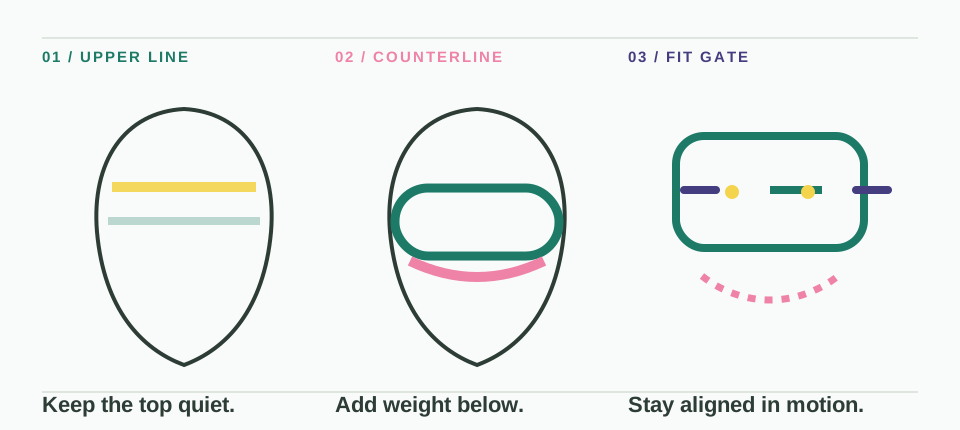
Read the Upper-to-Lower Drop First
A heart-shaped reading usually places the forehead above the cheekbones and jaw, with the face narrowing toward the chin. The pointed chin is not enough to settle the result: a diamond-shaped face can narrow to a point too. The useful first question is which horizontal line is actually widest when the hair is pulled back and the head is level.
Use a straight-on view and keep the same view while comparing frames. If the photo is tilted, the face is turned, or the temples are hidden by hair, the frame can appear to fix a proportion that the picture created. The frame should respond to the visible outline, not to a flattering angle.
Use a Counterline, Not a Costume Rule
For a heart-shaped face, a lower rim or a gently fuller lower lens can add a second route for the eye. Oval and round lenses can soften a pointed transition. Aviator-like lenses can add depth below the bridge. A light upper rim can keep the forehead from gaining another strong horizontal line.
This is a direction for the first comparison, not a ban list. A rectangular or cat-eye frame can still work when its width, corner lift, and upper rim do not exaggerate the widest part of the face. Keep the frame in its intended role: add a line, do not draw a second oversized forehead.
For a more neutral scale comparison, use the oval-face frame guide.
Set the Front Width Before the Mood
Measure or read the total front width of a pair that already stays in place. Use that pair as a control, then change one dimension at a time. A frame that ends well inside the widest facial line can make the upper face look more dominant. A frame that extends far beyond it can turn the balancing idea into visual bulk.
The goal is not the largest lower rim. Look for a front that reaches the broadest useful line without pushing the temples outward or making the eyes look lost inside the lenses. Check the front from the mirror and from a straight-on photo taken at the same distance.
Make the Bridge the Gate
Put the frame on without pushing it up into position. The bridge should keep contact when you look down, and the pupils should stay in a usable position inside the lenses. If the frame drops, a supposedly lower-weight shape may simply be sitting too low and placing its bottom rim on the cheeks.
Check the temple bend as well. A temple that flares, pinches, or pulls the front sideways can change the apparent width of the frame after a few minutes. For prescription glasses, ask an optician to confirm optical centering, lens design, and fitting height before treating a good front view as a final answer.
Borrow the round-face cheek-clearance check when a deeper lower lens reaches the cheeks.
Run the Moving-Face Check
A heart-face frame should survive more than a neutral expression. Keep the light and camera position fixed, then run this short sequence:
- Neutral: Check that the upper rim does not become the first thing you see and that the pupils sit naturally inside the lenses.
- Smile: Watch whether the lower rim reaches the cheeks or the bridge slides downward.
- Look down: Check bridge contact and whether the temples pull the frame forward.
- Three-quarter turn: Look for a crooked top line, one-sided temple pressure, or a frame that twists away from the face.
When a pair fails, name the failed variable before changing the style family: too narrow, too deep, sliding bridge, off-center eyes, upper-rim weight, or temple pressure. This keeps the next try-on useful.
For stronger corners, compare the square-face frame guide without changing the dimensions that already fit.
When the cheekbones are the widest line rather than the forehead, compare the diamond-face frame guide before changing the bridge or width.
Separate Heart From Diamond Before Ordering
Heart and diamond can both have a pointed or narrowing chin. Use the widest line as the tie-breaker: forehead-first suggests heart, while cheekbone-first suggests diamond. If the two readings stay close, keep both descriptions in your notes instead of forcing the frame choice to carry the uncertainty.
The frame response is different. A heart starting point may benefit from quiet upper weight and a lower counterline. A diamond starting point may need the frame to avoid adding another hard horizontal emphasis at the cheekbones. If the face result is mixed, compare the same frame in both roles and let width, bridge contact, and movement decide.
Change One Variable After a Miss
Do not replace the whole shortlist after one bad try-on:
- If the lower line balances the face but the frame slides, adjust the bridge or nose contact first.
- If the bridge stays but the eyes look crowded, compare a different eye size or front width before changing the lens family.
- If the width works but the forehead looks heavier, reduce upper-rim weight or choose a quieter color.
- If the shape feels too soft, keep the working dimensions and test a straighter top edge or a restrained corner.
- If the lower rim touches when you smile, change lens depth or frame position before rejecting every bottom-weighted outline.
This turns the first pair into a measurement reference. Preserve what worked and replace only the part that failed.
Order Questions for a Heart-Face Try-On
Should heart-shaped face glasses be wider at the bottom?
They can be a useful first test because a lower rim or deeper lower lens adds visual weight below the widest part of the face. Do not enlarge the whole frame automatically. Keep the front in scale, then check the bridge, pupils, and cheeks while moving.
Are cat-eye frames wrong for a heart-shaped face?
No. A cat-eye becomes a poor first choice when its upper corners or width make the forehead look broader than you intend. A lower, lighter, or more restrained lift can work when the bridge stays stable and the outer corners do not dominate the face.
Why do my glasses make my chin look sharper?
The frame may be adding a strong upper line while leaving the lower face visually empty, or it may be sitting too high or too low. Compare the upper rim, lower lens depth, and bridge position separately before deciding that the heart reading is the problem.
Do aviator glasses suit a heart-shaped face?
They are worth testing when the lens shape adds useful depth below the bridge without extending too far across the forehead. Check the lower rim during a smile and confirm that the lens design leaves enough usable space for your prescription.
What should I check before ordering heart-face frames?
Record the total front width, bridge behavior, pupil position, lower-rim landing, temple pressure, and lens requirements. Then repeat the neutral, smile, look-down, and three-quarter checks. A face-shape suggestion is only a shortlist; the pair that stays aligned is the one ready for an optician's final review.
Keep the Counterline That Stays Aligned
For glasses for heart shaped face, begin by reducing extra emphasis at the top and adding a controlled route below the eyes. Then let the frame pass the ordinary tests: width, bridge, pupil position, cheeks, temples, and prescription space. Balance is a starting direction. Stable alignment is the result worth keeping.