
Choose bangs for an oval face by setting the landing point, forehead coverage, part direction, and dry-hair maintenance before the first trim. Open the detector
bangs for oval face
For bangs for oval face, start with a line you can move: choose the shortest landing point, decide how much forehead stays open, and check the fringe after it dries. An oval face can carry micro, blunt, curtain, wispy, or swept sections, but the most flattering choice is the one that works with your hairline, texture, and morning routine instead of only matching a label. the face-shape reading guide
Choose the job, not the name
An oval face already has a relatively even relationship between length, forehead, cheeks, and jaw. That gives you room to experiment, but it also means a fringe can change the whole front view quickly. Before choosing a reference photo, decide what the bangs need to do:
- Keep the vertical flow: leave a visible opening or use longer pieces that separate when you move.
- Use the forehead on purpose: cover more of it when you want the upper face to feel shorter; keep more open when you like a lifted, open result.
- Add a direction: a center split, diagonal sweep, or curved edge creates a different route for the eye even when the cut length is similar.
- Stay adjustable: keep enough length at the sides to tuck, sweep, or reconnect with the rest of the haircut.
This is why one oval face can suit several apparently opposite styles. The decision is not whether oval faces are allowed to wear bangs. It is where the line lands, how much it moves, and how much daily correction you are willing to repeat.
Put the landing point before the scissors
Use three marks before you discuss a cut: the shortest center point, the outer point where the fringe begins to blend, and the widest place you want the front to appear. A small center section with longer outer pieces leaves more escape routes than a wide, solid section cut from temple to temple.
Check the hair dry and in its normal direction. A cowlick can split a straight line, a wave can shorten when it dries, and fine hair can look fuller when wet than it will look at breakfast. Ask for the first pass longer than the final target, then reassess the fall before removing more.
If you are comparing bangs for oval face female looks, bangs for oval face girls references, or bangs for oval face men cuts, use the same landing-point test. The styling label changes the mood; it does not replace the fit check.
Keep the forehead coverage adjustable
The phrases bangs for oval face big forehead and bangs for oval face small forehead describe different coverage problems, not different face-shape pages. For a higher forehead, a fuller or longer center can reduce the open area, but it should still be able to separate if the line feels heavy. For a smaller forehead, start with a lighter center, a higher opening, or a side direction so the fringe does not use all the available space.
For bangs for oval face with glasses, leave enough room for the frame bridge and temples to sit without pushing the hair into the eyes. For bangs for oval face wavy hair or bangs for oval face curly hair, judge the dry pattern rather than a wet combed line. For bangs for oval face long hair and bangs for oval face short hair, make sure the outer pieces actually connect to the haircut instead of stopping as a detached shelf.
The term bangs for oval face shape is simply another way to ask the same proportion question. Keep the page focused on the front section, the forehead opening, the side connection, and the maintenance cost.
Three landing patterns that stay flexible
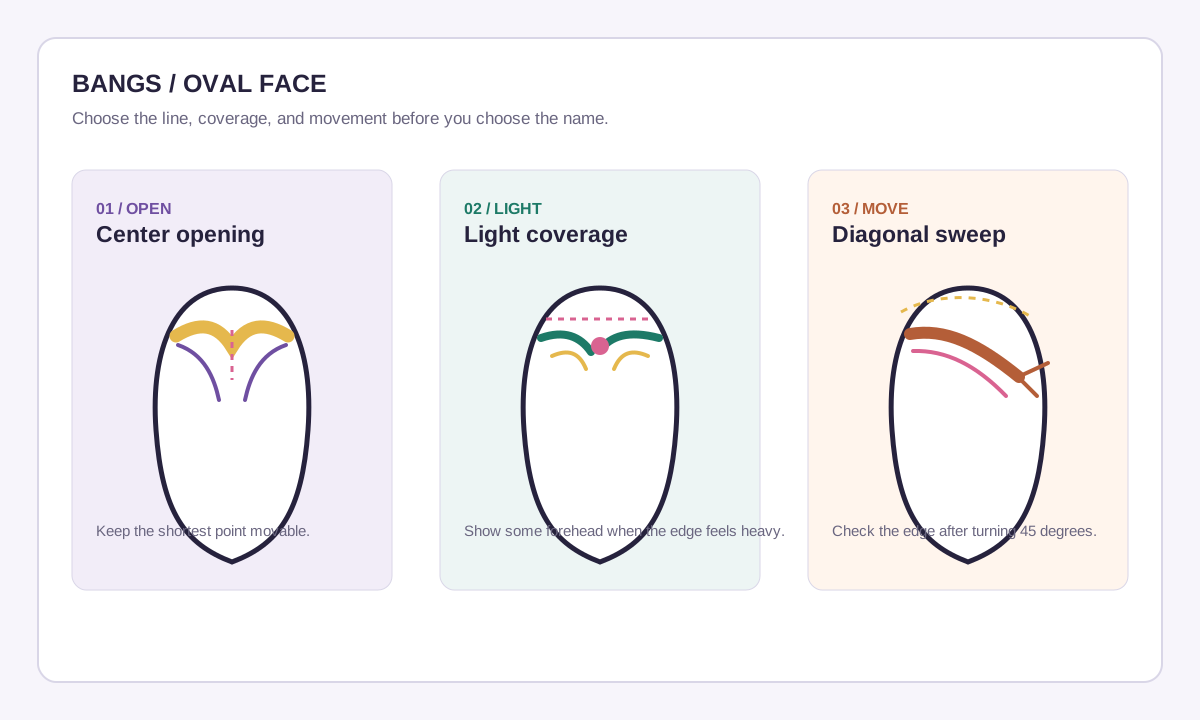
A center opening with long wings
Curtain bangs for oval face can begin with a center or slightly off-center split and travel longer toward the cheek. This is a useful first test when you want a visible frame but do not want a fixed bar across the forehead. Move the part a few millimeters before cutting again; the direction can change the perceived width more than a small length change.
A light strip across the brow
Use wispy bangs for oval face when you want the center lighter and small gaps to show through. They are useful when you want the eyes to remain the focus or when your hair is fine enough that a dense section would collapse. Keep the outer pieces longer than the center so the fringe can be brushed aside on a low-effort day.
A diagonal line that travels outward
Use side bangs for oval face to create a clear direction from the brow toward the cheek. They are a practical choice when one side has a stronger growth pattern or when you want to test movement without committing to a full central section. Compare the sweep from the front and at 45 degrees; the outer landing point should still connect to the haircut.
Use medium length bangs for oval face with any of these three routes. Choose the part and landing point first, then decide whether the edge should be soft, blunt, curved, or textured. A longer fringe is not automatically lower maintenance if it needs a precise blow-dry every morning.
Run a five-minute dry reset
Use this check before a first trim, after a salon visit, or when deciding whether the style is actually repeatable:
- Minute one: dry the front in its normal part without forcing it flat.
- Minute two: clip or brush the center into the proposed opening, sweep, or coverage line.
- Minute three: look straight on and at 45 degrees. Note whether the shortest point pulls attention to the place you intended.
- Minute four: turn your head, smile, and lower your chin. The outer pieces should not jump into the eyes or reveal an unexpected gap.
- Minute five: take one front photo and one side photo in the same light. Keep the version that still reads as intentional after movement.
This test is also a safer way to compare curtain bangs for oval face Men references with a softer, longer version. The useful result is not a universal winner; it is a clear record of which part, coverage, and direction survived your own hair behavior.
Let texture set the maintenance budget
Straight hair often shows the edge immediately, so a blunt line needs regular checking. Wavy hair may need a short blow-dry direction at the roots before the shape settles. Curly hair should be judged in its normal curl pattern, with enough length left to account for spring. A pronounced cowlick can make a solid straight fringe separate, while a lighter or longer design may use that movement instead of fighting it.
Plan the upkeep before the cut. A dense blunt edge may need a quick trim around every three to four weeks; a longer, softer, or wispy edge can often wait longer if you like the grown-out stage. Those are planning ranges, not guarantees. Your growth speed, humidity, texture, and willingness to wash only the front will decide the real interval.
If the first result looks flat or oily the next morning, wet only the fringe, reset the direction, and dry it before washing the whole head. That small reset often tells you whether the issue is the cut, the part, or simply the way the hair slept.
Change the line before cutting more
When the first try misses, change one variable at a time:
- The forehead feels crowded: open the center or move the shortest point upward before making the whole fringe shorter.
- The upper face looks wider: narrow the section and let the outer pieces travel farther instead of adding more thickness.
- The fringe looks flat: lift the roots briefly and turn the ends away from the face before removing length.
- One side separates: follow the natural direction and test a diagonal or off-center part while the hair is dry.
- The cut feels disconnected: keep the center length and lengthen the outer pieces until they merge with the haircut.
For the surrounding cut, use the broader oval-face haircut guide to check how front length, waves, and crown height work together. Bangs should be a movable part of the haircut, not a separate block pasted onto it.
Short answers before the first trim
Can bangs work with glasses on an oval face?
Yes. Keep the shortest point clear of the frame bridge and let the side pieces travel around, rather than directly into, the temples. Check the glasses on during the 45-degree and smile portions of the dry reset.
Are blunt bangs a bad choice for an oval face?
No. A blunt edge can be striking on a balanced face, but it has less room for error. Start with a narrower section, leave the outer pieces movable, and confirm that your hairline can hold the line before making it dense.
How can I test bangs without cutting them?
Use a clip-in fringe, pin the front into the proposed shape, or brush a temporary section across and photograph it from three angles. Test the result after the hair is dry and after you move, not only in a still front view.
Should I choose curtain, side, or wispy bangs first?
Choose the option that matches your easiest repeatable motion. Curtain sections are useful when you want an opening, side sections when you want a clear diagonal, and wispy sections when you want the lightest coverage. If you are adding frames to the look, compare the result with the oval-face frame guide before shortening the front.
The best bangs for an oval face are not defined by a single cut name. Keep the landing point adjustable, match the coverage to the forehead you actually have, and judge the line after drying, sleeping, and moving. That process lets you experiment without turning one imperfect fringe into a permanent verdict.