
Choose sunglasses for an oval face by setting the width boundary, lens depth, bridge contact, and movement test before choosing the finish. Open the detector
sunglasses for oval face
For sunglasses for oval face, start with the widest visible line of your face, then choose the lens depth and corner direction that give you the intended look. Oval proportions allow many frame families, but the pair still has to stay inside a useful width range, keep the bridge steady, and remain comfortable when the light and your expression change.
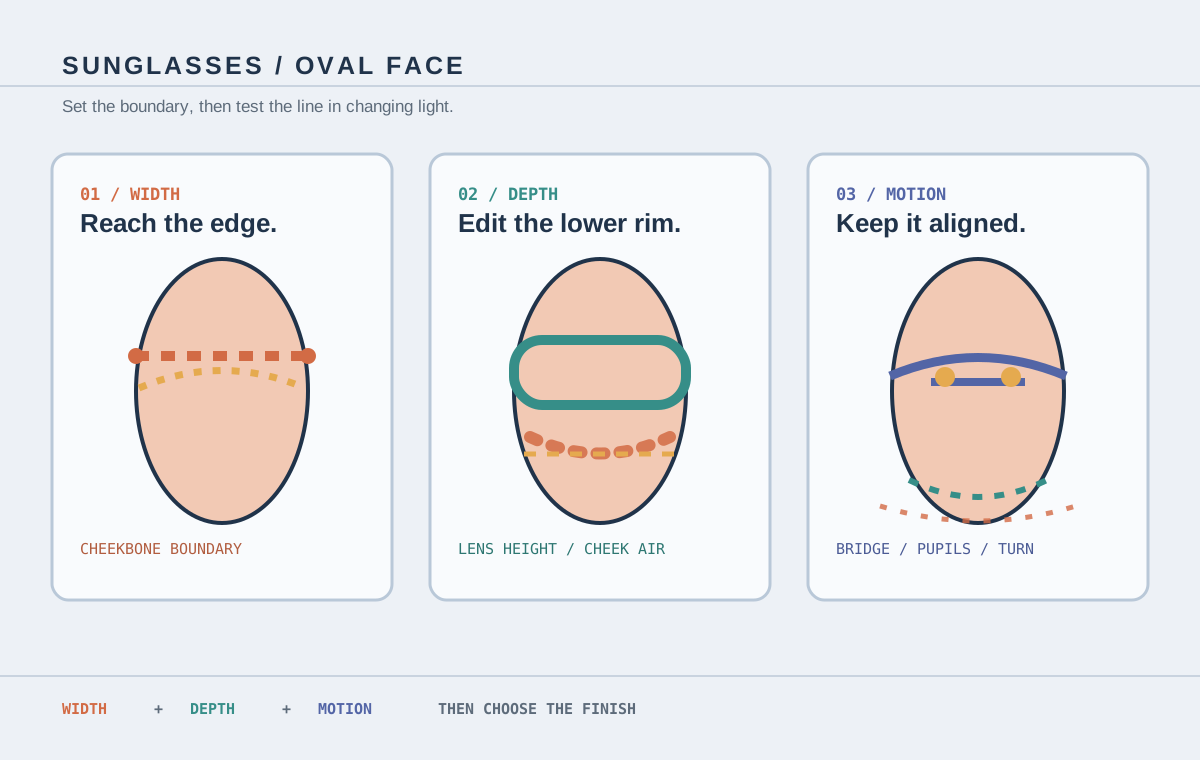
Read the oval as a moving ratio
An oval pattern usually reads longer than it is wide, with the cheekbones carrying the broadest part of the outline and the forehead and jaw narrowing without a hard corner. Confirm that pattern in a level, straight-on view before shopping. Pull hair away from the cheeks, use one light source, and record the face length and cheekbone width in the same units.
The label does not decide the frame. A long oval may need more lens depth to keep the face from looking narrow, while a smaller oval may need a calmer front so the sunglasses do not take over the expression. Write down the visual job first: add corners, add depth, lift the outer line, or keep the outline quiet.
Set the width boundary before the style name
Hold a frame front against the face or compare its published total width with the widest cheekbone line. The first useful pair usually reaches that line and may extend a little beyond it. Too little width can make the face look longer and place the lenses in a small central island. Too much width can push the temples outward, hide the eyes, and make every other shape decision harder to read.
Use the frame measurements as a control record: total front, lens width, bridge, lens height, and temple length. Change one dimension at a time. A label such as medium or oversized is not a measurement, and two frames with the same label can land very differently on the nose and cheeks.
For clear-frame and prescription fit, compare the oval-face glasses guide after the width and depth test.
Give each lens shape a separate job
The best sunglasses shape for oval face is the one that supplies the line you want without disturbing the width boundary:
- Square or rectangular: adds a clear horizontal edge and firmer corners when the face needs more structure.
- Rounded square: keeps the corners readable while avoiding a hard, graphic break.
- Aviator: adds lens depth and a downward route; check that the lower rim does not sit on the cheeks.
- Cat-eye: sends the outside line upward. Try cat-eye sunglasses for oval face when the goal is lift rather than more width at the center.
- Round or oval: can look quiet and continuous, but compare a larger or more defined brow so the frame does not disappear inside the face.
- Wrap or sport frame: adds coverage and grip for movement; check side pressure and the amount of tint before judging the silhouette.
The choice is a visual experiment, not a permission list. Put two different shapes at a similar usable width, take the same neutral and three-quarter views, and decide which line is doing useful work.
Use lens depth to edit the vertical read
Width alone cannot tell you whether a pair works. Compare a shallow lens with a deeper lens while keeping the front width close. A shallow lens can keep the look light and leave more cheek clearance. A deeper lens can interrupt a long vertical read, but only if the lower rim stays off the cheeks and the bridge does not slide.
Look straight ahead, smile, and turn slightly. Mark where the lower edge lands at rest and where it lands after the cheeks lift. If the rim touches, test a different bridge height or lens depth before changing the whole frame family. If the lenses make the eyes look lost, reduce height or choose a lighter rim before adding more width.
Separate bridge contact from temple pressure
Put the sunglasses on without pushing them into position. Check four points in order:
- The bridge stays seated when you look down.
- The pupils remain sensibly placed inside the tinted lens area.
- The temples rest without pinching or flaring away from the head.
- The frame returns to the same alignment after you look up.
Low-bridge fit, adjustable pads, lens curvature, and prescription requirements can matter more than the shape printed on a product page. For strong prescriptions or wraparound lenses, confirm the usable optical area with an optician. A good visual outline is not a substitute for optical centering or a stable fit.
Translate search labels into one fitting test
The wording changes by audience, not by face-shape physics. A listing described as sunglasses for oval face female, sunglasses for oval face women, or sunglasses for oval face men should still be checked by front width, lens depth, bridge contact, and movement. When someone searches for sunglasses for oval shape face male, the useful answer is the same measurement sequence with a style choice added afterward.
For a more fashion-led result, a query such as trendy glasses for oval face female or trendy glasses for oval face male is a request for color, material, and line. Keep those finish choices separate from the fit gate. If you are comparing sunglasses for diamond face, first confirm that the cheekbone peak is actually the dominant line before borrowing an oval-face recommendation.
Run the light-and-motion audit
Tint and reflections can hide a small fit problem. Use the same pair in the same order:
- Window light: check whether glare makes one lens look heavier or hides the pupil position.
- Smile: watch the lower rim and note any cheek contact.
- Look down: confirm that the bridge stays seated and the lenses do not slide.
- Three-quarter turn: check the temple angle, side flare, and whether the frame twists.
- Short walk: notice bounce, pressure behind the ears, and whether the tint still gives usable contrast.
Write the first failed variable as width, depth, bridge, pressure, glare, or movement. Change only that variable in the next try-on. This keeps a failed pair useful instead of turning every mismatch into a new face-shape rule.
Questions to settle before checkout
Can an oval face wear almost any sunglasses?
It can usually test more frame families than a strongly top-heavy or jaw-heavy outline, but fit still limits the result. Start with the width boundary, then compare lens depth, bridge position, and the line you want to add.
Are oversized sunglasses a good first choice?
They are a possible style direction, not an automatic fit. Keep the front close to the cheekbone boundary, make sure the eyes stay readable, and check that the temples do not pull the frame outward.
Are aviators useful for a long oval face?
They can be. The deeper lens may add useful vertical interruption, but compare the lower rim at a smile and make sure the bridge does not turn the extra depth into cheek contact.
Should round sunglasses be avoided?
No. A round or oval rim can work when it is large enough to remain visible and the brow or bridge adds a deliberate line. A small, low-contrast circle is the riskier first comparison because it can repeat the center of the face.
Keep the pair that repeats the result
Choose sunglasses for oval face by recording the width boundary, lens depth, bridge behavior, pupil position, temple pressure, glare, and movement in one order. Keep the pair that creates the intended line, stays aligned in changing light, and still feels usable after a normal walk. Choose tint and decoration after the geometry survives the test.
For a cheek-first comparison in tinted lenses, use the round-face sunglasses guide and keep the outdoor movement order.
For stronger corners at the same width boundary, compare the square-face frame guide.