
Choose round-face bangs by opening or angling the front, moving the landing point beyond the cheeks, and checking the line after it dries. Open the detector
bangs for round face
For bangs for round face, start with an open or diagonal front and let the shortest point travel away from the cheeks. Long curtain bangs, side-swept pieces, and a light textured fringe are safer first tests than a dense straight line because they create a route for the eye and leave room to adjust the width. Check the front dry, at 45 degrees, and after a normal morning before cutting shorter. the face-shape reading guide
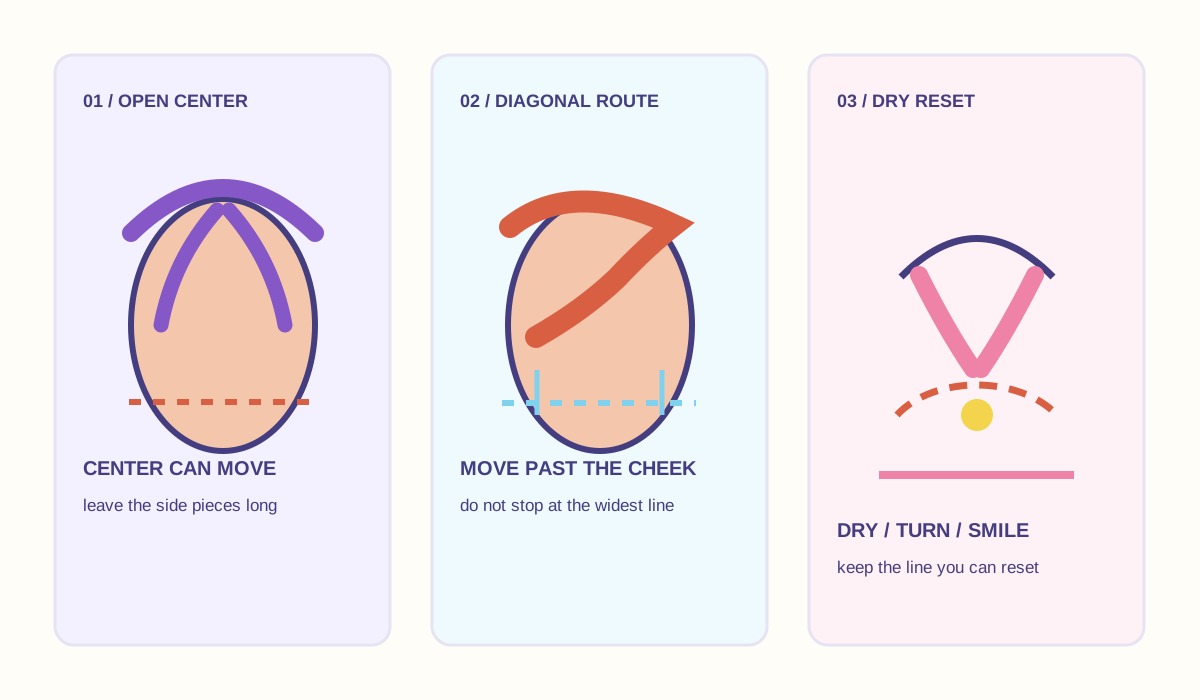
Decide what the front must change
A round face can look wider when a heavy horizontal edge stops at the fullest part of the cheeks. That is a visual effect, not a rule about what you are allowed to wear. Begin by naming the job:
- Create a route: a diagonal sweep or center opening gives the front a direction.
- Move the landing point: let the outer pieces reach below the cheek's widest point before they blend into the haircut.
- Control the amount of hair: a smaller section can show texture and movement instead of making a solid band.
- Keep a reset path: leave enough length to pin, sweep, or re-part the fringe when your hair behaves differently.
This order matters because a style name hides the variables. Two curtain fringes can have different center lengths, different outer landings, and completely different maintenance costs.
Use the cheek line as the first measurement
Pull the hair back, face a level mirror, and mark the widest visible cheek line with a removable clip or a fingertip. Then mark three points on the proposed fringe: the shortest center point, the place where the sides start to lengthen, and the point where the front will merge with the rest of the hair. Do this with dry hair in its usual part.
For a first trial, keep the side points past the cheek line. If you want a shorter look, test the center separately rather than cutting the whole front to the same level. The useful question is not whether the fringe is long or short. It is whether the strongest line stops at the widest point or moves beyond it.
If you are comparing bangs for round face female looks, bangs for round face women references, or bangs for round face men cuts, use this same landing-point test. The audience label can change the styling direction, but it does not replace width, movement, or fit.
Match the fringe to the forehead you have
Searches for bangs for round face and big forehead and bangs for round face and small forehead describe different coverage jobs. A higher forehead can handle more center length or a fuller edge, but keep the outer pieces light enough to open when the front feels crowded. A smaller forehead usually benefits from a lighter center, a higher part, or a side direction so the fringe does not use all the available space.
With bangs for round face with glasses, keep the shortest point clear of the bridge and make sure the side pieces do not sit on the temple arms. Put the glasses on during the test rather than adding them after the cut. If the frames push the hair forward, lengthen the outer pieces before making the center denser.
Four flexible starting patterns
Long curtain pieces
Curtain bangs for round face can start at the center part or slightly off center, then travel toward the cheek and below it. The opening is adjustable, and the long sides can connect to layers instead of ending as a separate block. Test the part on both sides before choosing the shortest center point.
A clear side sweep
Side bangs for round face create a diagonal from the brow toward the cheek. This can be a practical first trial when one side has a stronger growth direction or when you want to see movement without committing to a full central section. Check the sweep straight on and at 45 degrees; the outer end should still join the haircut.
A light, uneven fringe
Wispy bangs for round face can work when the center needs texture rather than a solid bar. Keep the section narrow, leave visible gaps, and preserve longer pieces at the sides. Fine hair may need less product than expected, while thick hair may need the internal weight reduced without shortening the outer frame.
Texture that follows the hair
For bangs for round face and curly hair, judge the curl after it dries and avoid using a wet combed line as the final length. For bangs for round face straight hair, the edge will show every millimeter, so softness at the ends and a narrow section can lower the cost of a small mistake. For bangs for round face and long hair, connect the outer pieces to the length; for bangs for round face straight hair with a short cut, check that the front does not become a separate horizontal shelf.
Make the dry reset your fitting room
Before a first trim, use a clip, temporary fringe, or pinned front section to simulate the line. Repeat this five-minute reset:
- Dry the hair in its normal part without forcing it flat.
- Clip the center into the proposed opening, sweep, or coverage line.
- Look straight on and at 45 degrees. Note where your eye goes first.
- Put on glasses if you wear them, smile, turn, and lower your chin.
- Wait until the hair settles, then photograph the front and one side in the same light.
The result that survives movement is more useful than a still front view. If a fringe looks right only after a precise blow-dry, record that as part of its cost before deciding that the cut is a fit.
Change one variable when the test fails
When the first version feels wrong, keep the scissors still and change one control at a time:
- The cheeks look wider: narrow the section or extend the sides past the fullest cheek line.
- The forehead feels crowded: open the center or move the shortest point before removing more length.
- The edge looks too heavy: remove visual weight through texture, spacing, or a side direction rather than making the entire fringe shorter.
- One side separates: follow the growth direction and test an off-center part on dry hair.
- The front looks disconnected: lengthen the outer pieces until they meet the layers or perimeter of the haircut.
For the broader haircut, use the round-face hair guide to compare crown height, face-framing layers, and where the length stops. For a frame check, use the round-face frame guide before shortening a side piece that is already clear of the temples.
Budget the upkeep before the cut
A dense or sharply trimmed edge needs more frequent correction because small changes show at the center of the face. A longer, softer, or wispy edge often gives you a more forgiving grow-out, but it may still need a brief root reset after sleep. Wash only the front when the rest of the hair is fine, then dry it in the normal direction instead of flattening it against the forehead.
Humidity, oil, curl spring, and a cowlick can change the landing point from one day to the next. Write down the reset you can actually repeat: air-dry, a short root blow-dry, a round brush, or a clip. The best version is the one you can restore without turning every morning into a full styling session.
Short answers before you choose
Are bangs for round face shape always supposed to be long?
No. Length is only one way to move the visual line. A short, light, or textured center can work when the section is controlled and the sides do not stop at the widest cheek point. Test the dry landing before committing to a blunt edge.
Can Asian hair wear bangs for round face styles?
Yes. The useful starting variables are density, growth direction, straightness, and how the hair settles after drying. A lighter center, longer side pieces, or a diagonal route may be easier to reset than a dense horizontal fringe, but the dry test decides.
Should I choose curtain or side bangs first?
Choose the direction you can repeat. Curtain pieces are useful when you want an adjustable center opening, while side pieces give a more obvious diagonal. If both look close, keep the one that stays clear of the cheeks, glasses, and eyes after movement.
What is the safest first experiment?
Use a clip or pinned section, keep the outer pieces long, and test the line after drying and sleeping. That reveals the real failure variables before a shorter cut removes your escape route.
Round-face bangs work when the front creates movement, a useful landing point, and a repeatable reset. Start with the line you can change, then let texture, length, and finish follow the behavior of your own hair.