
Choose sunglasses for a heart shaped face by quieting the upper rim, adding controlled lower depth, and checking the bridge in changing light. Open the detector
sunglasses for heart shaped face
For sunglasses for heart shaped face, start with the broadest visible line at the forehead and upper cheekbones, then choose a frame that adds controlled depth or a softer lower route toward the chin. Aviator, rounded, softly rectangular, and restrained cat-eye frames can all work, but the pair still has to stay inside a useful width, keep the bridge steady, and avoid making the upper rim the only thing you notice.
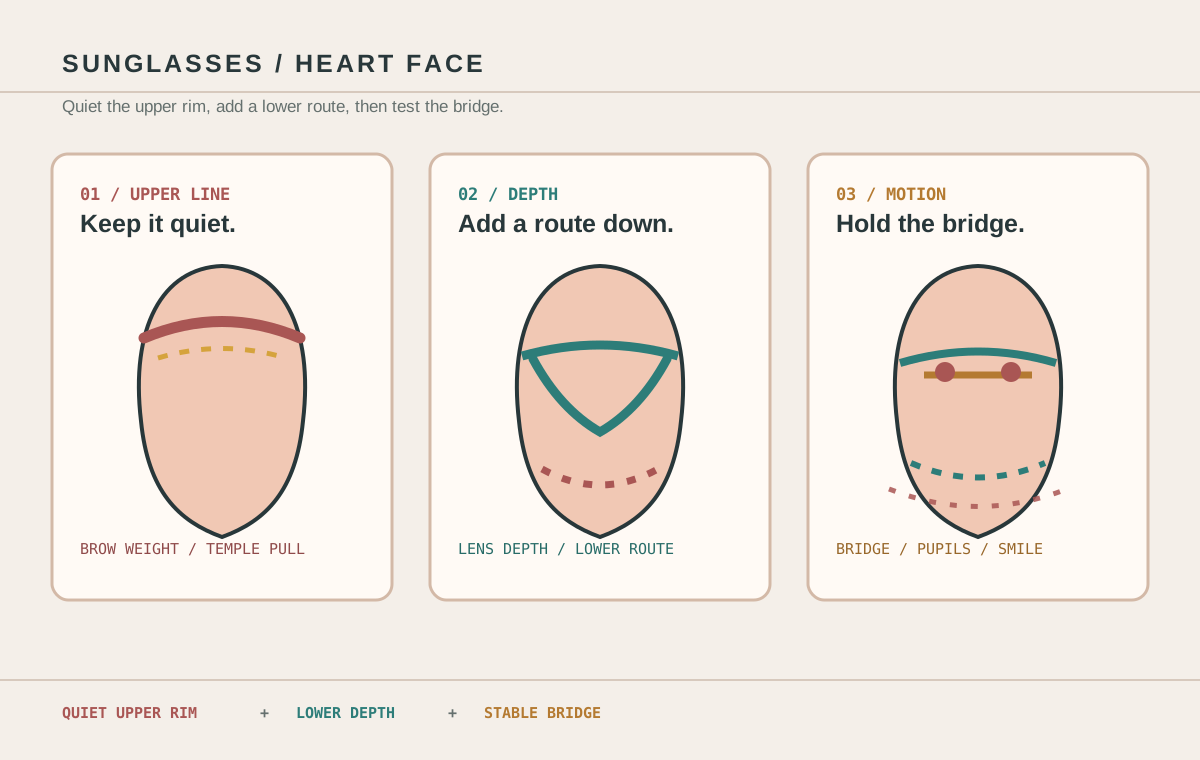
Map the upper line before choosing a frame
A heart-shaped pattern often reads wider across the forehead and upper cheekbones, then narrows through the jaw toward a smaller or pointed chin. Confirm that route in a level, relaxed view before treating the label as a shopping rule. Move hair away from the temples, keep the light even, and compare a straight-on view with a three-quarter view so a camera angle does not turn a balanced face into a top-heavy one.
Write down the visual job before naming a style. You may need more lens depth, a gentler curve, a lower visual counterline, or simply a frame that does not add another strong horizontal bar at the brow. This separates the facial pattern from the product label and gives every try-on the same starting question.
Give the frame one of three jobs
Use the same approximate front width while comparing different lines. This makes the frame shape visible instead of letting size decide the result.
- Add downward depth: Aviator and some teardrop lenses bring the lower edge farther down than a shallow brow-only frame. Check that the drop creates balance without landing on the cheeks.
- Soften the transition: Round, oval, and gently curved frames can interrupt the change from a broad upper face to a narrow chin without adding a hard corner at the forehead.
- Add structure with restraint: A softly rectangular or lightly squared frame can supply direction. Keep the browline quiet enough that the frame does not widen the upper face again.
Cat-eye and butterfly shapes belong to the third category only when the outside lift follows the cheekbone instead of pulling all attention toward the temples. A small, sharply upswept corner can be more top-heavy than a wider frame with a calmer brow.
Set total width and lens depth separately
Hold the front of the sunglasses against the widest visible facial line, or compare the product's total frame width with that line. The first useful pair usually reaches the cheekbone boundary and may extend slightly beyond it. A narrow front can leave the cheeks looking crowded; an oversized front can hide the eyes and make every later decision harder to judge.
Then compare lens depth without changing the width. A deeper lens can interrupt the vertical taper and give the lower face more visual presence. A shallow lens can keep the upper outline light, but it may leave the chin and lower face with no counterline. Measure lens width, lens height, bridge width, and temple length when the listing provides them. Words such as medium, oversized, or flattering are not measurements.
Use the face-shape reading guide to confirm whether the forehead or cheekbones are the dominant visible line before choosing a frame.
Keep the upper rim from doing all the work
Look at the browline first, then cover it mentally and inspect the lower half of the frame. If the upper rim is thick, dark, or heavily decorated, it may repeat the widest facial zone. Try a lighter material, a thinner top edge, a half-rim treatment, or a lower-contrast color before increasing lens size.
The lower edge should add a route without becoming a shelf. Check the distance between the lens and the cheek at rest, then smile. If the lower rim touches the cheek or makes the face look pulled downward, change lens height or bridge position before abandoning the whole frame family. The best adjustment is often one dimension, not a new style label.
Check bridge contact and eye placement
Put the sunglasses on without pushing them into place. Run this short fit gate:
- Look straight ahead and check that the pupils sit comfortably inside the tinted lens area.
- Look down and confirm that the bridge stays seated instead of sliding toward the tip of the nose.
- Turn three-quarters and check that the temples do not flare, pinch, or twist the front.
- Smile and relax; note whether the lower rim meets the cheeks or changes the frame angle.
Low-bridge fit, adjustable nose pads, lens curvature, and prescription requirements can matter more than the shape name. A frame can balance the outline in a still image and still fail because the bridge moves or the optical center is wrong. For strong prescriptions, wrap designs, or high-coverage lenses, confirm the usable optical area with an optician.
Translate the audience labels into the same test
Search wording changes with the shopper, not with the fit variables. A listing for sunglasses for heart shaped face male or sunglasses for heart shaped face female should still be checked by total width, lens depth, bridge contact, pupil position, and cheek clearance. The phrase best sunglasses for heart-shaped face female may describe a finish or trend, but it does not replace the fit gate.
If the widest line is actually the cheekbone rather than the forehead, do not force a heart-face conclusion. The sentence sunglasses for diamond face belongs to a different starting map: find the cheekbone peak first, then release it with the frame line.
For a product described as heart shaped face glasses, compare the clear or lightly tinted version first when possible. It reveals bridge movement and eye placement before a dark lens, mirror coating, or gradient tint changes the apparent weight.
Run a five-view light and motion audit
Use one pair and one order instead of approving it from a single mirror pose:
- Neutral daylight: record the front width, upper-rim weight, pupil position, and lower-face depth.
- Smile: watch the lower rim and note any cheek contact or downward shift.
- Look down: check whether the bridge slides and whether the lenses tilt.
- Three-quarter turn: inspect temple pressure, side flare, and the way the outside edge meets the cheekbone.
- Bright walk: move toward a window or outside and check glare, contrast, and whether the tint hides the eye position.
Write the first failed variable as width, depth, brow weight, bridge, cheek clearance, glare, or pressure. Change only that variable in the next comparison. This keeps the result repeatable when the light changes and prevents a single failed try-on from becoming a new face-shape rule.
For clear-frame and prescription fit after the sunglasses test, compare the heart-face glasses guide.
Choose the finish after the geometry works
Once the line and fit survive movement, compare tortoise, transparent, metal, and colored options at the same dimensions. A lighter temple can reduce side weight; a darker lens can make the front look denser; polarization can reduce glare without changing the frame's outline. Keep UV protection, prescription suitability, lens material, and activity needs separate from the styling decision.
For a cheek-first tinted-lens comparison, use the round-face sunglasses guide and keep the same movement order.
What sunglasses are usually a good first comparison?
Try one aviator or deeper lens, one rounded or oval frame, and one softly rectangular frame at a similar total width. Keep the pair that balances the upper line, leaves the eyes readable, and stays steady when you smile and look down.
Should a heart-shaped face avoid cat-eye sunglasses?
No. A controlled outer lift can echo the cheekbone direction. The risk is a sharp, heavy brow that adds all its weight to the forehead and temples. Compare the outside flare, upper-rim thickness, and lower lens depth together.
Are oversized sunglasses automatically better?
No. Extra width can make the frame dominate, hide the eyes, and destabilize the bridge. Start at the cheekbone boundary, then add size only when the lens depth and movement checks still pass.
What if the chin looks too pointed behind the frame?
Compare a little more lower lens depth or a softer rounded route before adding a heavier brow. The goal is a controlled counterline, not a frame that hides the entire lower face.
Keep the pair that repeats the balance
Choose sunglasses for heart shaped face by recording the dominant facial line, total front width, lens depth, upper-rim weight, bridge behavior, pupil position, cheek clearance, glare, and movement in the same order. Keep the pair that adds useful lower depth or a softer counterline without making the forehead heavier. Choose color and decoration after that geometry works in real light.