
Choose sunglasses for a square face by softening or directing the corners, then checking lens depth, bridge contact, and jaw clearance. Open the detector
sunglasses for square face
For sunglasses for square face, start with a frame that keeps the front wide enough to clear the cheekbones, then decide whether you want curves, a soft aviator drop, or a controlled corner. Round, oval, aviator, cat-eye, and softly rectangular options can work when the bridge stays seated, the lower rim clears the jaw and cheeks, and the lenses do not hide the eyes.
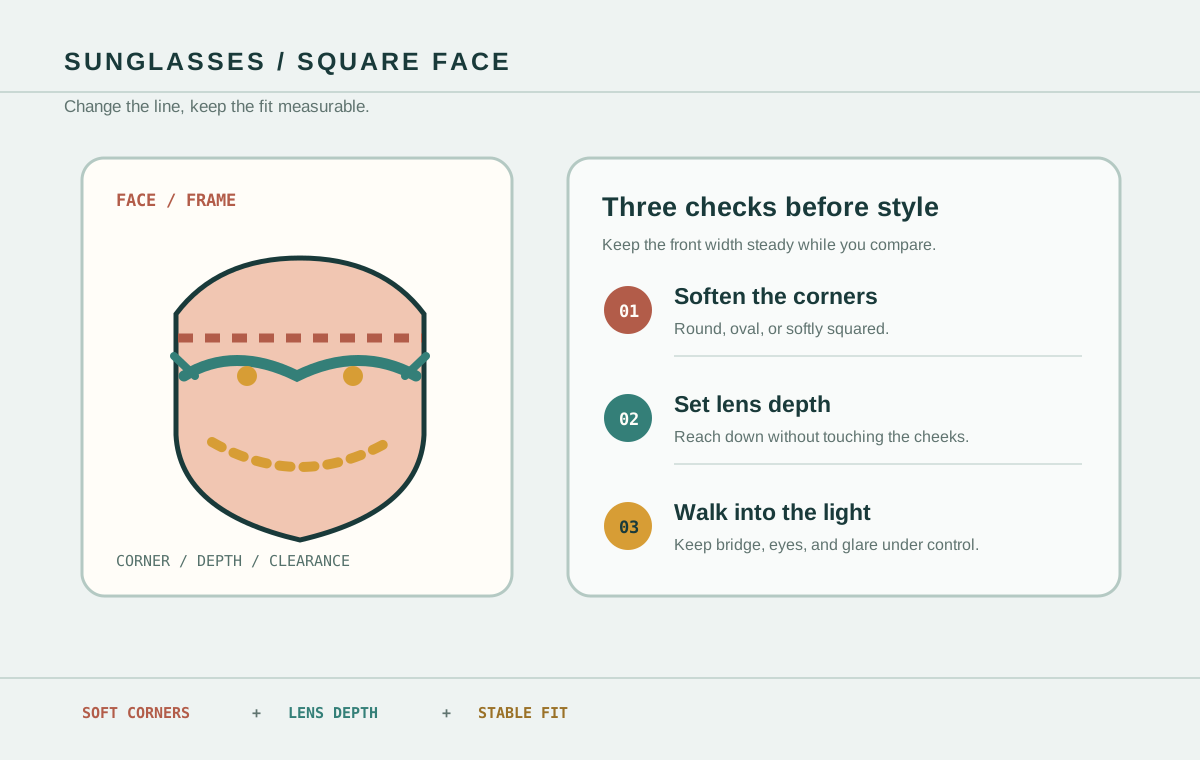
Check the four square-face edges
A square pattern usually shows a forehead, cheekbone line, and jaw that read close in width, with a clear corner or flatter run at the lower face. Confirm that pattern in a level, relaxed view before treating it as a shopping rule. Move hair away from the temples, use even light, and compare the front view with a three-quarter view so a head tilt does not exaggerate one corner.
Record the widest visible line and the face length in the same units. The label is useful only when it predicts a fit question. A broad jaw may need a softer lower rim; a strong brow may need a quieter top line; a long square pattern may need lens depth rather than another horizontal bar.
Use the face-shape reading guide to confirm that the jaw and forehead are actually close in width before changing the frame line.
Use curves to change the first read
Keep the approximate front width steady while comparing the line supplied by each frame family:
- Round or oval: brings a continuous curve against the flatter jaw and forehead. Keep enough definition at the brow that the frame does not disappear inside the face.
- Aviator: adds a downward route through lens depth. Check the lower edge at a smile because a deep teardrop can land on the cheeks.
- Cat-eye: sends the outside line upward and outward. A restrained lift can open the temples; a very sharp, heavy brow can make the upper edge look wider than intended.
- Soft rectangle or rounded wayfarer: preserves direction without repeating every square corner. Look for softened outer corners and a bridge that does not turn the frame into a rigid bar.
Do not choose a curve only because it is described as flattering. Put two shapes at a similar usable width, use the same light, and ask which frame changes the first read while keeping the eyes and jaw visible.
Separate top line from lens span
The browline and the lens body do different work. A thick upper rim can add structure, but it can also repeat a broad forehead. A deeper lens can give the lower face more visual presence, but it can also meet the cheeks or make the frame dominate.
Check the measurements separately: total front width, lens width, bridge width, lens height, and temple length. A frame that is too narrow makes the jaw look wider by comparison. A frame that is too wide pulls at the temples and makes the eyes look small. Once the outside edge clears the cheekbone line and the bridge is stable, stop changing width just to chase a stronger label.
For a large square pattern, compare one light-rim frame with one darker frame at the same width. If the dark top edge overwhelms the face, change rim weight before changing the lens shape. If the lower face still feels too flat, test lens depth or a curved lower edge rather than adding more brow weight.
Test the frame against the jaw shelf
The lower rim needs its own movement check. Put the sunglasses on without pushing them up, then use this sequence:
- Look straight ahead and note where the lower edge sits relative to the cheekbone and jaw.
- Smile and relax; check whether the rim touches the cheek or changes angle.
- Turn three-quarters and watch whether the outside corner catches on the cheekbone.
- Look down and see whether the bridge drops the frame onto the lower face.
- Walk toward a window or outside and check whether glare hides the eye position.
If the first failure is cheek contact, test a shallower lens or a higher bridge. If the first failure is a sliding bridge, solve the nose fit before trying another silhouette. If the first failure is visual heaviness, try a thinner rim or lighter lens tint while keeping the dimensions that already fit.
For clear-frame and prescription fit after the sunglasses test, compare the square-face glasses guide.
Keep bridge and temple pressure measurable
A frame can soften the square outline in a still image and still be unusable after ten minutes. Check that the bridge remains seated when you look down, the pupils stay sensibly inside the tinted area, and the temples rest without pinching or flaring away from the head. Low-bridge fit, adjustable pads, lens curvature, and prescription requirements can outweigh the shape name.
Ask for the published total width, bridge width, lens height, and temple length instead of relying on small, medium, or oversized. For strong prescriptions, high-coverage lenses, or wrap designs, confirm the usable optical area with an optician. Styling direction should not replace optical centering, UV protection, or a stable fit.
Use the search variants without changing the fit
The same geometry applies when a listing says sunglasses for square face female, sunglasses for square face shape male, sunglasses for square face male, or sunglasses for square face shape. A shopper may also ask for sunglasses for square face reddit, sunglasses for square face boys, or sunglasses for square face and big nose; those labels can describe the audience or concern, but they do not replace the width, bridge, lens-depth, and movement checks. If the question is what is the best sunglasses for a square face, start with the pair that passes the fit gate, then choose the finish.
If the cheekbones rather than the jaw are the strongest point, the phrase sunglasses for diamond face belongs to a different starting map. Find the peak first instead of forcing the square-face test onto a different outline.
For a softer cheek-first comparison, use the round-face sunglasses guide and keep the same width and movement order.
Run the glare-and-angle check
Tint and reflections can make a frame look calmer than it is. Use the same five views for every comparison and write down the first variable that fails:
- Neutral daylight: record width, brow weight, pupil position, and lower-rim landing.
- Soft indoor light: check whether the frame disappears or becomes a heavy block around the eyes.
- Smile: watch for cheek contact and a lower edge that tilts toward the jaw.
- Three-quarter turn: inspect temple pressure, outside-corner clearance, and side flare.
- Short walk: notice bounce, bridge movement, glare, and usable contrast.
Change one variable at a time. If width passes but the look is too severe, soften the corners or rim weight. If the line passes but the pair moves, change bridge or temple fit. If the geometry passes but the eyes look hidden, reduce tint density or lens coverage before rejecting the frame family.
If the forehead is clearly wider and the chin narrows, compare the heart-face sunglasses guide before adding more corner contrast.
Questions before you order
Is a round frame the safest starting point?
It is a useful comparison because the curve can interrupt a flat jaw and forehead, but it is not automatically the best fit. Start at the cheekbone width, then check bridge contact, lens depth, and whether the rim stays clear when you smile.
Do aviators work on a square face?
They can. The lens drop adds a lower route and the bridge can keep the upper line open. Compare the lower edge at a smile and make sure the teardrop does not turn into cheek contact or pull the frame down.
Should square sunglasses be avoided?
No. A softly squared or rounded wayfarer can add direction without repeating a hard corner. The risk is a rigid, thick frame at the exact width of the jaw, so compare corner radius and rim weight separately.
What if my jaw still dominates?
Try more lens depth, a quieter brow, or a curved lower edge while keeping the front width stable. If the jaw is still the clearest line, check the bridge and cheek clearance before increasing the frame size.
Keep the pair that clears the corners
Choose sunglasses for square face by recording the width boundary, upper-rim weight, lens depth, bridge behavior, cheek and jaw clearance, glare, and movement in one order. Keep the pair that changes the line you want without hiding the eyes or turning the lower rim into another hard shelf. Choose color, polarization, and decoration after the geometry remains stable on a normal walk.
For an oval starting point with more freedom to vary the line, compare the oval-face sunglasses guide.