
Choose bangs for a square face by opening, curving, or sweeping the front, then testing the landing point after dry hair and sleep. Open the detector
bangs for square face
For bangs for square face, start with a curved, diagonal, or softly separated front that breaks a strong horizontal forehead line without hiding the eyes. Curtain bangs, side-swept bangs, textured brow-length pieces, and longer bottleneck shapes can all work when the outer sections keep moving toward the cheekbones instead of stopping as a blunt shelf. Test the fringe dry, with your usual part, and after sleep before removing more length.
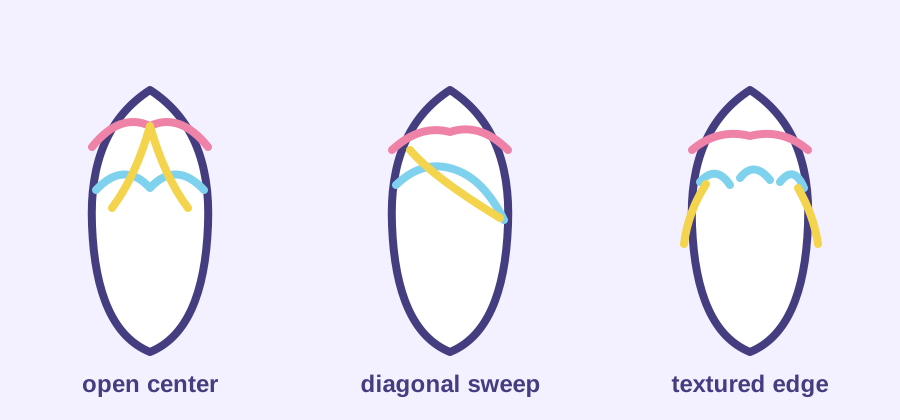
Start with the shape of the opening
A square face usually has a strong jaw and a forehead that reads close to the same width. Compare the wider notes in the [square-face hairstyle guide](/square-face-hairstyles) if the whole cut is still undecided, then use this page for the front edge. Bangs should therefore make a deliberate choice about direction. A flat edge that ends at both temples can repeat the face's geometry, while a curved center, diagonal sweep, or open part gives the eye another route.
The goal is not to make the face look round. It is to decide where the front changes direction:
- Open the center: a middle or slightly offset part can let the eye travel down and out rather than across one solid bar.
- Curve the edge: a shorter center with longer outer pieces softens the transition at the forehead without creating a rigid arch.
- Move the landing: let the sides continue toward or below the cheekbone area before they join the haircut.
- Keep a reset: leave enough length to sweep, pin, or change the part when the hairline behaves differently.
Build a square-face fringe from three measurements
Before choosing a named style, use a dry front section and record three points: the shortest place near the center, the outer place where the fringe begins to blend, and the widest place where the front is allowed to sit. This small map is more useful than copying a photo whose hair has a different density or growth pattern.
Measure the brow line
Look straight ahead with the forehead relaxed. If the proposed edge runs straight across both brows, soften it with spacing, a slight curve, or a diagonal direction. A full brow-level section can work when its ends are broken and the surface has movement; the risk is a hard, uninterrupted line that mirrors the jaw.
Keep the outer landing mobile
The outer pieces should have somewhere to go when you turn your head. Let them blend into layers, a bob perimeter, or the longer side of the haircut. If the ends stop exactly at the widest cheek or jaw point, move them longer before thinning the whole section. A longer landing can be swept away on a low-effort day and shortened later.
Choose a pattern you can reset
Soft curtain opening
Curtain bangs for square face can begin at the center or slightly off center, then open toward the cheekbones. Keep the shortest center point adjustable and ask for the sides to continue into the surrounding layers. Compare a closed, offset, and wide opening while the hair is dry; the best version is the one that still opens without a heavy round-brush routine.
Side-swept bend
Side bangs for square face create a diagonal that interrupts the four-corner read of the face. Start with the direction your roots already prefer, then use a soft edge rather than a sharply carved wedge. The sweep should pass across the forehead and finish into the opposite side without dropping as a single dense block.
Textured brow fringe
Wispy bangs for square face or layered bangs for square face can work when the section has enough substance to hold its shape. Keep visible gaps small and intentional, use point texture at the ends, and preserve longer pieces near the temples. Too little density can make the fringe separate into oily strings, while too much untouched weight can create a dark bar.
Curly or wavy front
Curly bangs for square face and wavy bangs for square face need a dry measurement because spring changes the landing point. Cut or shape the front in its normal curl pattern, leave extra length until the shrinkage is understood, and judge the silhouette after the hair settles. The useful question is where the curl mass sits, not whether the strand was measured wet.
Match the cut to hair behavior
Cowlick or strong hairline
A strong cowlick can separate a straight fringe even when the cut is technically even. Use the growth direction as part of the design: an off-center opening, side sweep, or longer curtain piece may be more repeatable than forcing a solid horizontal edge. Wet only the front when it misbehaves, reset the roots, and record how long the fix actually takes.
Fine straight hair
Fine straight hair shows every edge, so begin with a narrower section and leave the outer pieces longer. Bangs for square face over 50 follow the same landing test: keep the edge soft, avoid a heavy shelf at the brow, and leave enough length to sweep the front away when the hairline needs less coverage. A light texture at the ends can prevent a helmet effect, but aggressive thinning can make the front look sparse. Test the fringe under ordinary indoor light as well as a bright bathroom light before changing the density.
Curl spring on the fringe
Texture can supply the softness a square outline needs, but it can also push a short fringe upward or outward. Ask where the widest curl grouping should land, then preserve a connection to the rest of the haircut. Use the normal product amount during the test; a style that works only with a new routine is not yet a reliable fit.
Make the salon brief precise
Describe the effect and the repair path rather than only naming a trend. Say whether the jaw should look more visible or more blended, whether the front should open or sweep, where the outer pieces should merge, and how much morning styling is realistic. A useful brief might be: "Keep the front soft and movable, start with a narrow center opening, let the sides reach past the cheekbone area, and leave enough length to change the part."
Bring one front photo and one three-quarter photo of the dry test. Mention glasses, a cowlick, curl spring, or a short forehead before the first cut. The terms bangs for square face female, bangs for square face women, and bangs for square face Asian can describe different styling contexts, but none of them replaces the same landing, density, and movement checks.
Run the square-face bang check after sleep
Use a five-minute reset before approving the shape:
- Dry the front in its normal part without pressing it flat.
- Set the proposed opening, sweep, or brow line with a clip or brush.
- Check straight on and at 45 degrees, then note where the ends meet the cheek and jaw outline.
- Add glasses if you wear them, smile, turn, and lower your chin.
- Repeat the same look the next morning and change only the part, root direction, or product amount.
This separates a cut problem from a reset problem. If the shape works after sleep, keep the notes. If it fails, change one control instead of shortening the entire front.
Repair the common failure modes
- The fringe repeats the jaw: break the edge, open the center, or move the sides into longer layers.
- The forehead looks wider: narrow the section and use a diagonal or curved route rather than adding density.
- The eyes disappear: shorten or lighten the center only after confirming that the outer pieces still connect.
- The ends stop at the cheek: leave them longer and blend them into the haircut instead of thinning everything.
- The style separates by noon: follow the hairline, reduce the amount of product, and test the root direction while dry.
- The cut looks good only in the salon: repeat it after a normal wash and one night before calling it a fit.
Questions before you cut
Do bangs suit a square face?
Yes. The most repeatable starting points are soft curtain pieces, a side-swept direction, or a textured fringe whose ends do not form one hard horizontal line. The right choice depends on the hairline, density, texture, and maintenance time as much as the face label.
Are blunt bangs bad for a square face?
Not automatically, but a dense straight-across edge has less room for error because it can echo the jaw and forehead width. If you want a blunt effect, start with a narrower section, soften the corners, and keep the outer pieces movable.
What are the best bangs for a square face?
Curtain bangs, side-swept bangs, textured brow-length pieces, and longer bottleneck shapes are useful first comparisons. Keep the option that creates a direction, blends at the sides, and still looks intentional after your normal morning reset.
Can I wear short bangs with a square face?
Short bangs for square face can work, but short and wide pieces emphasize the edge quickly. Simulate the length with a clip first, keep the section controlled, and check the result at 45 degrees and after sleep before making the cut permanent.
If the front also has to clear eyewear, check the same dry landing against the [square-face glasses guide](/glasses-for-square-face-shape). For a rounder outline, the [round-face bangs guide](/bangs-for-round-face) uses a different cheek test, while an oval outline is covered in the [oval-face bangs guide](/bangs-for-oval-face). Square-face bangs work when the front adds a route instead of another box. Choose the opening, landing, and texture as separate controls, then keep the version that survives dry hair, movement, and the morning you actually have.