
Choose a round-face men hairstyle by controlling temple width, keeping a movable top, and testing the outline after a normal morning. Open the detector
hairstyles for round face men
The most reliable starting point is a style with visible height or direction on top, controlled width at the temples, and a front edge you can reset without rebuilding the whole haircut. A textured crop, lifted side part, soft quiff, or movable fringe can all work when the sides do not become the widest part of the head.
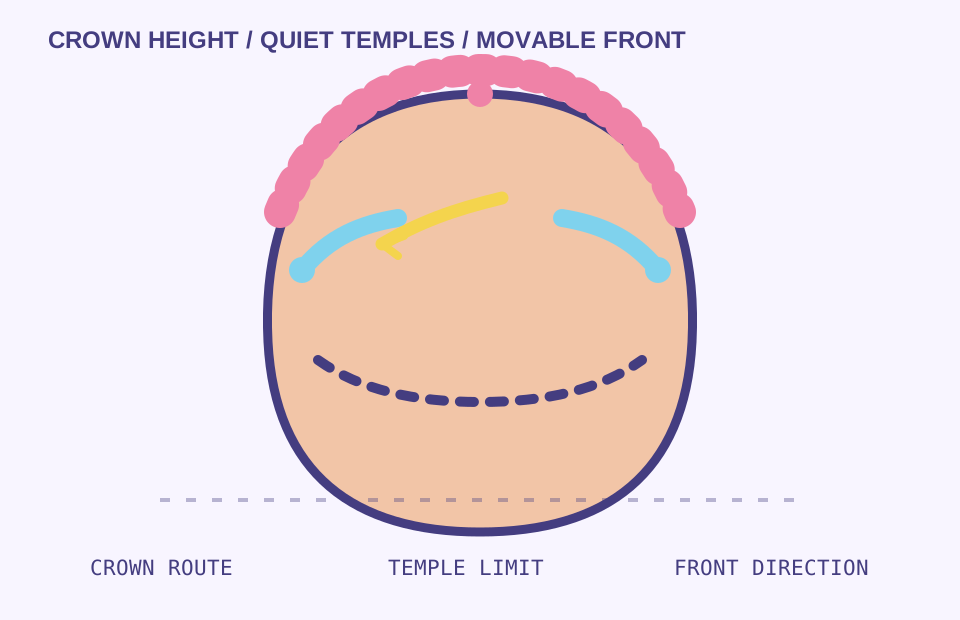
The four-line fit card
Do not choose from a name alone. Before the appointment, record four visible lines in a front photo and one three-quarter photo:
- Crown line: how much height remains when the hair is dry and relaxed.
- Temple line: where the sides begin to add width beside the cheeks and ears.
- Front line: whether the fringe or part creates a diagonal route, a vertical lift, or a flat bar.
- Morning line: what the outline looks like after sleep and your normal reset.
The first three lines explain the shape. The fourth prevents a salon-only result from becoming the default. Use the same light and camera angle for each test. If you need help separating a round outline from a squarer one, use the site's [face shape chart](/face-shape-chart) and keep the hair pulled away while you compare the measurements.
Start with structure, not a celebrity photo
A round pattern often has a close length-to-width read, softer jaw turns, and cheeks that can become the strongest horizontal signal. That does not mean every man needs the same cut. It means the haircut should contribute a second direction through the crown or front.
Treat a haircut for round face men as a fit brief, not a magic label. Tell the barber where the sides may stop gaining width, where the top should keep movement, and what must still be possible on a normal morning. A reference image is useful only after those checkpoints are clear.
If the face label itself is uncertain, compare the [face-shape reading guide](/what-is-my-face-shape) before changing the hair. A head tilt, heavy fringe, or wide camera lens can make the visible outline look rounder than the underlying proportions.
Four style families to test
Textured top with a tight taper
Keep the side surface close and leave enough top length to break the flat line. A taper is a calmer first test than taking every side to skin. Ask for texture that can be pushed up, forward, or slightly to one side, then check which direction keeps the temples quiet.
This family is useful for straight or moderately wavy hair because the shape is easy to read. If the top collapses, change the drying direction or product amount before removing more length. If the sides puff out, remove local bulk rather than making the whole cut shorter.
Side part with a lifted front
A side part gives the face a diagonal route. Keep the part natural enough to find again, and leave a front section that can rise without becoming a rounded dome. The best version is the one that still has a clear part after a commute, a hat, or a quick hand reset.
Use a small amount of product at the roots and push the front away from the fullest cheek line. If the part looks too severe, soften the edge with fingers instead of combing the entire top flat.
Soft quiff or short pompadour
Use this when the hair can hold height and the wearer is willing to spend a few minutes drying it. The useful contrast is a quieter side surface against a taller, textured top. The top does not need to be large; it needs to keep a direction that survives the first movement.
Start with moderate height. Excess product or a hard shine can turn the top into a solid block, while too little support lets it fall back onto the forehead. Check the profile as well as the front because a quiff that only works head-on may become bulky from the side.
Angular or swept fringe
The fringe can work when it is light, broken, or swept rather than cut as a dense horizontal strip. Leave enough forehead visible to keep the front from shortening the face, and place the shortest point where it can move away from the cheek line.
For straight hair, test a side sweep before committing to a blunt fringe. For wavy or curly hair, respect the dry shrinkage and check the fringe after it has fully settled. The [round-face bangs guide](/bangs-for-round-face) covers the front-line test in more detail.
Match the cut to the hair you actually have
Straight and fine hair
Keep the top long enough to direct, but avoid a heavy, one-length sheet. A short blow-dry at the roots can create a useful lift; the sides should be dried closer to the head. Ask where the top will still move when the product is gone.
Thick or coarse hair
The risk is not a lack of volume but uncontrolled side width. Have the barber identify the temple and sideburn bulk separately. Keep the top's weight intentional so thinning does not leave a weak front while the sides remain full.
Wavy hair
Work with the wave's natural bend instead of forcing a flat, glossy surface. The top can carry a loose diagonal, while the sides are shaped close enough that the wave does not expand at the cheeks. Photograph the dry result, not only the damp finish.
Curly hair
Give the curl room on top and set the side boundary before choosing a fade height. A curl pattern that is short everywhere can expose the round outline; a curl pattern that is wide at the temples can amplify it. The correct question is where the curl is allowed to expand.
The barber brief
Read the brief as checkpoints:
- Keep the top movable enough to create a vertical or diagonal route.
- Keep the temples and upper sides from becoming the widest line.
- Keep the front light enough to separate, sweep, or lift.
- Show the dry shape before the final product is added.
- Leave a maintenance path that fits the wearer's actual mornings.
Bring one reference image for the texture and one sentence for the outline. During the cut, check the first side and front section before the whole head is finished. If the top is already too flat or the side line is already too wide, the correction is easier while the shape is still being built.
For a beard that changes the lower outline, compare the [round-face beard guide](/beard-styles-for-round-face) after the hair shape is set. Hair and beard should not both add their strongest width at the cheeks.
If the jaw reads more angular than round, compare the [square-face men haircut guide](/haircuts-for-square-face-men) before changing the top; the fade-height decision is different.
Run the next-morning test
Do not judge the haircut only under salon light. Use this short test the next day:
- Take a front photo with dry hair and no filter.
- Recreate the normal routine with the same dryer, brush, or hands.
- Turn three-quarters and note the first place the silhouette widens.
- Change one variable: side bulk, front direction, top lift, or product amount.
- Keep the change only if the result still looks natural after ten minutes of movement.
This turns a vague feeling into a repair map. If the top is flat, change the root direction. If the temples are wide, reduce only that zone. If the fringe is a heavy bar, open or sweep it. If every version needs a long styling session, choose a simpler family rather than calling the haircut a failure.
What to avoid, and how to repair it
- Flat sides with a flat top: add direction at the crown before changing the length.
- A dense straight fringe: reduce weight or move the landing point to one side.
- An all-over buzz: if the face looks wider, grow the top enough to create a route before trying another close cut.
- A low fade with no top plan: keep the fade only if the top supplies enough contrast and movement.
- A rounded helmet shape: remove the side expansion and keep the crown separate from the temple line.
- A cut that works only with product: test the dry outline after a normal wash and use less product before asking for a new shape.
The repair should follow the first failure. Do not change length, fade, fringe, and product all at once or you will not know what improved the result.
Troubleshooting the shape
Should men with round faces choose long or short hair?
Either can work. Short hair is useful when the top still has direction and the sides stay controlled. Medium or longer hair is useful when the ends and front pieces create a diagonal instead of hanging as a flat curtain. Choose the length that gives you a repeatable outline.
Does a fade suit a round face?
A fade can help by reducing side bulk, but the fade height is not the whole answer. Check the top, temple transition, and profile together. A close fade with a flat top can still leave the face looking broad; a moderate taper with a movable top may be easier to wear.
Can curly hair work with a round face?
Yes. Keep the curl's most generous volume where it supports the crown, and set a clear limit at the temples. Let the curl dry fully before deciding whether the side boundary is working.
Should a beard be added automatically?
No. A beard is another shape, not a correction that every face needs. If you add one, keep its cheek width and chin length part of the same next-morning test. The hair should not be fixed by adding a second wide outline below it.
How often should the cut be checked?
Check it once after the first wash, once after sleep, and once after the normal styling routine. Those three states reveal more than a single appointment photo. Keep notes on the first failure so the next trim changes one useful variable.
The short version
For hairstyles for round face men, keep the sides from becoming the widest line, give the top a direction you can repeat, and judge the front after it dries. Pick the family that matches your texture and maintenance time, then use the next-morning test before taking more length away.