
Choose a square-face men haircut by deciding whether to show or soften the jaw, then controlling fade height, top movement, and hard edges. Open the detector
haircuts for square face men
For a square face, start with a haircut that makes a deliberate choice about the jaw: show it with shorter sides and a clean top, or soften it with a lower taper, more length, and movement across the front. The most dependable options are a textured quiff, textured crop, graduated crew cut, soft side part, or longer scissor cut. The important variables are fade height, top direction, and how many hard edges you add.
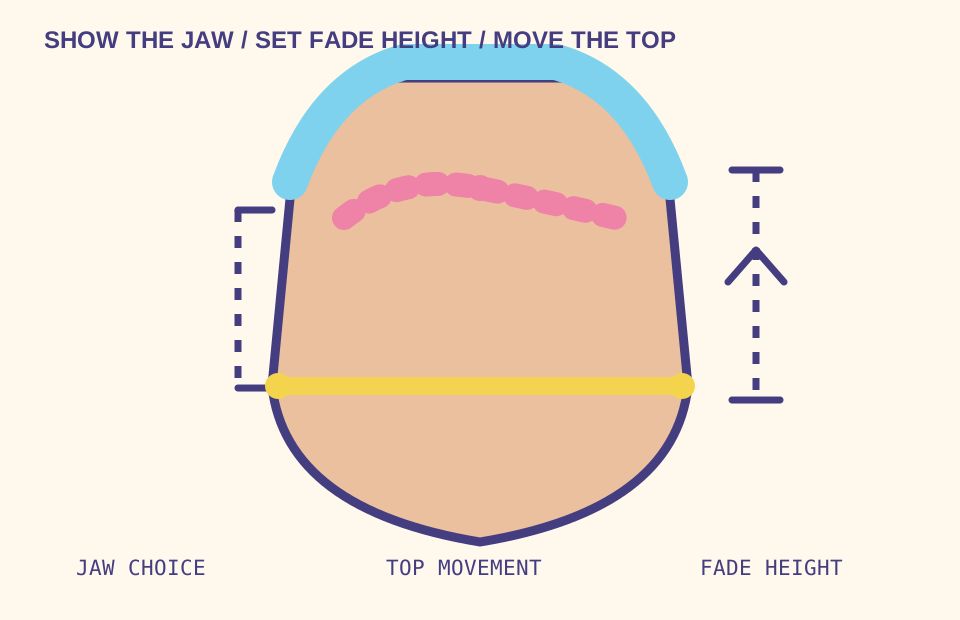
Decide what the haircut should do to the jaw
A square face already has a strong lower outline. That means the haircut does not need to invent structure, and it should not automatically try to hide it. Decide which result you want before choosing a named cut:
Show the jaw
Keep the sides short enough that the jaw becomes the clear lower boundary. A high fade, close taper, crew cut, or shaped buzz can make the result clean and intentional. Leave a small amount of direction through the front or crown so the head does not read as one flat block.
This route works best when the sharpness is part of the look you want. Ask for a controlled top and one clean perimeter rather than stacking a hard line-up, flat top, and squared neckline together.
Soften the jaw
Keep some side connection, lower the fade or taper, and leave enough length on top to move diagonally or backward. A relaxed side part, textured crop, or longer scissor cut can break the straight lines without making the face look hidden.
This route is useful when the jaw feels too severe for the setting, or when the hairline and density look better with a little more coverage. The goal is not roundness everywhere. It is one softer route across an otherwise angular outline.
Set three control points before the cut
1. Fade height
Fade height decides how much of the jaw and temple area remains visible. A higher fade exposes more structure and makes the lower outline stronger. A low taper leaves more connection beside the face and can make the result gentler. If you are unsure, start lower; hair can be removed later, but a high fade cannot be added back during the appointment.
2. Top movement
The top should have a direction you can repeat. A short quiff sends the eye upward, a side part sends it across, and a broken crop interrupts a straight forehead line. Height does not need to be dramatic. A small lift with separated texture is usually more useful than a tall, solid wall of product.
3. Hard-edge count
Choose one feature to keep crisp: the hairline, the part, or the neckline. When every border is squared off, the haircut can repeat the geometry of the face and create a boxy result. Pair a sharp line-up with a soft textured top, or pair a natural hairline with a cleaner side part. The contrast looks planned because the lines are not all competing.
Compare the haircut families
Textured quiff with a taper
This is the strongest all-around starting point when the front has enough length to lift. Keep the sides tapered or faded to the level that matches your jaw goal, then use point-cut texture on top so the surface does not become a single flat plane.
Ask for a rounded lift at the front rather than a squared shelf. Dry the roots up and back, use a flexible product, and stop when the hair still moves. If the quiff collapses, check the drying direction and product weight before asking for more height.
Textured crop with a low or mid fade
A crop is practical when you want a shorter front and less daily styling. The top should be broken into pieces, and the fringe should be irregular or lightly swept unless you specifically want a geometric line. Keep enough upper-side connection that the top does not look perched above the jaw.
This family adapts well to straight, wavy, and dense hair, but the texturizing must match density. Too much thinning can expose fine hair; too little bulk removal can make high-density hair form a shelf. Judge the crop dry before the final product is chosen.
Graduated crew cut
A crew cut keeps the sides compact while leaving the front slightly longer than the crown. That small graduation gives the hair a direction even when you do not style it. It is a useful choice for low-maintenance routines and for men who want to emphasize a strong jaw without committing to a fully shaved head.
Say that you want the front to keep a little length and the top to graduate back, rather than asking for one guard everywhere. Check the hairline first because a short cut exposes both the edge and the head shape.
Soft side part
A natural side part creates an angled route across the top and gives a square outline some asymmetry. Keep the part findable but avoid carving it so deeply that it becomes the only feature. A low taper or scissor-cut side leaves enough connection to soften the lower edge.
Follow the direction your hair already takes. Ask for enough length on the larger section to move up and across, then use a light product and fingers for a less rigid finish. A hard part with skin-high sides is a different, sharper choice; make it only when emphasizing the geometry is intentional.
Longer scissor cut swept back
Three or four inches on top with tidy, connected sides can make the face feel less severe. The length breaks up the outline and lets the eye travel through the hair instead of stopping at the jaw. This is a good option for men who prefer a softer frame or who want to keep more styling flexibility.
It needs a clear maintenance limit. Heavy sides that grow to the jaw can add width exactly where the face is already strong, so ask the barber to preserve movement without allowing the side mass to settle as a shelf.
Match the plan to the hair you have
Straight or fine hair
Keep enough length at the front to create a part, small lift, or broken fringe. Ask for texture that separates the top without stripping out the density. A matte product usually keeps the surface lighter than a high-shine pomade, especially when the haircut is short.
Dense or wiry hair
The main job is to place bulk, not to remove everything. Ask the barber to identify the temple weight separately from the crown weight. Keep the top intentional, then reduce only the areas that expand into the cheek or jaw line.
Wavy or curly hair
Judge the silhouette when the hair is dry. Curls can add the rounded movement that softens a square jaw, but an aggressive fade can leave the top looking disconnected. Specify where the widest part of the curl pattern should sit and how much forehead the front should cover.
Receding or uneven hairline
Use the hairline as a design constraint rather than forcing a straight edge. A short textured crop, soft side part, or modest quiff can redirect attention without requiring a dense front. Ask for the cut to work with the actual growth pattern after the hair dries.
For a nearby contrast, the [round-face men hairstyle guide](/hairstyles-for-round-face-men) uses a different first test: it protects the temples from becoming the widest line. The shared lesson is to judge the dry silhouette, not the haircut name.
Give the barber a usable brief
Replace a celebrity photo with three decisions:
- Say whether you want the jaw emphasized or softened.
- Give the side instruction: high fade, low taper, or connected scissor sides.
- Give the top instruction: textured quiff, broken crop, graduated crew, soft part, or swept-back length.
- Name one edge that should stay crisp and one area that should stay soft.
- Explain how many minutes you will actually spend styling it.
A clear brief could be: “Keep the jaw visible, use a low-to-mid taper, leave enough length for a textured side part, keep the temples connected, and make the hairline natural.” Or: “I want the jaw softened, keep the sides scissor-connected, leave three inches on top, and make the front move back without a hard part.”
The [square-face hairstyle guide](/square-face-hairstyles) is useful for the wider face-shape comparison, while this page is focused on men's cut geometry and the barber conversation. If the label is uncertain, use the [face shape chart](/face-shape-chart) before committing to a strong change.
Run a dry-fit test before approving the cut
Do not judge the haircut only in the chair with wet hair and fresh product. Use the same test after the first normal wash:
- Photograph the front with the head level and the hair fully dry.
- Photograph both three-quarter angles so the temple-to-jaw transition is visible.
- Check whether the top creates a route upward or across, or whether it repeats the face's horizontal line.
- Move your head, speak, and smile. Note whether the side mass spreads toward the jaw.
- Change one variable the next morning: fade height, front direction, top lift, or product amount.
If the jaw feels too exposed, lower the fade or leave more side connection at the next trim. If the head looks boxy, soften one hard edge before changing the whole cut. If the top looks flat, change the root direction before adding more product. A one-variable correction tells you more than a complete restart.
Avoid repeating the square outline
- Flat top with squared corners: add broken texture or a rounded front route.
- Hard line-up plus hard part plus squared neckline: keep one crisp feature and relax the others.
- Heavy sides ending at the jaw: remove the local shelf instead of shortening the entire top.
- High skin fade with no top plan: leave enough movement so the exposed jaw looks deliberate.
- One-length buzz with unwanted severity: keep the cut only if the strong outline is the intended result.
- Full product dependence: test the shape after a normal wash before asking for more structure.
The right answer is not always the softest one. A square face can carry a close cut, but the close cut needs an intentional edge and a top direction. It can also carry length, but the length needs a side boundary so it does not turn into a wide curtain.
Questions men ask about square-face cuts
What is the best haircut for a square face?
A textured quiff with a taper is a reliable first comparison because it adds controlled height and movement without hiding the jaw. A textured crop or graduated crew cut is easier to maintain, while a soft side part or longer scissor cut gives a gentler result.
Should men with square faces avoid short hair?
No. Short hair often works well because the jaw already supplies definition. Be careful with a short cut that is flat and squared at every border; that repeats the same geometry and can make the whole head look rigid.
Does a fade suit a square face?
Yes, but fade height changes the message. A high fade emphasizes the jaw, while a low taper keeps more connection and can soften it. Pair the fade with a top plan instead of treating it as the entire haircut.
How do I know if my face is square or oblong?
Both can have a strong angular jaw. A square face reads close to equal in length and width; an oblong face is noticeably longer. If the face is long, extra height on top may stretch it further, so compare the proportions before choosing the cut.
Should the beard match the haircut?
Treat the beard as a second outline. A close beard can reinforce a strong jaw; a softer chin shape can reduce a hard corner. Compare the [round-face beard guide](/beard-styles-for-round-face) for the lower-outline test, even when your face is not round, because the one-variable method still applies.
Keep the choice repeatable
The best haircuts for square face men are the ones that make a clear jaw decision, control the fade height, keep one top direction, and still look coherent after a normal morning. Bring the barber a shape brief, test the dry result from three angles, and change one variable at the next trim. That gives the strong face shape room to work without letting the haircut become a second box.